
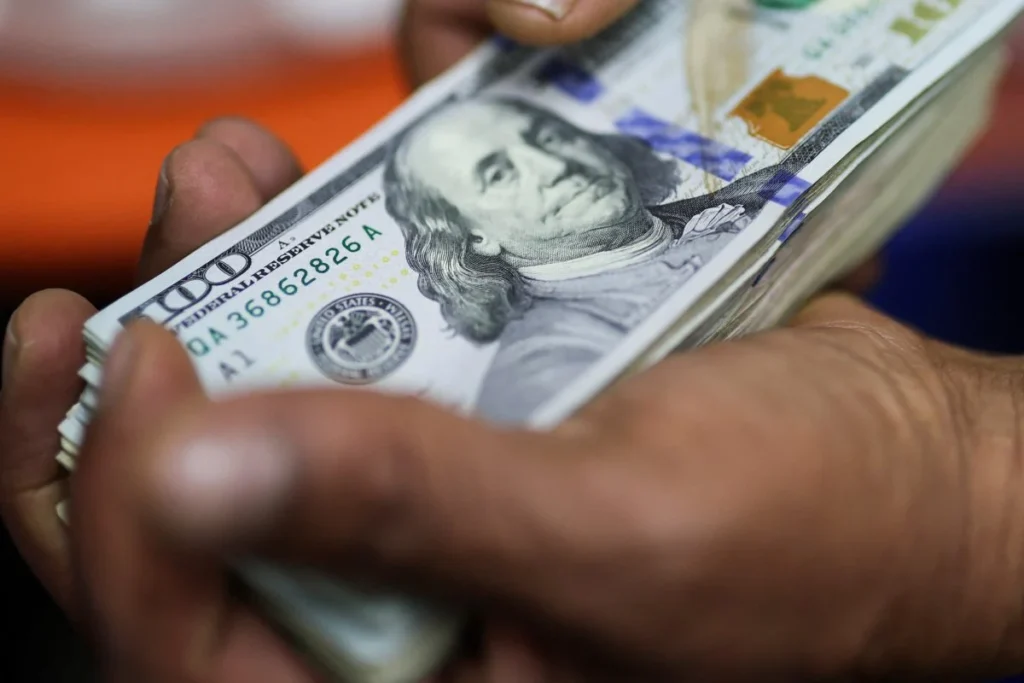
The dollar was pinned near multi-week lows on Friday and headed for a distinct weekly decline as cooling U.S. consumer price data fueled expectations that the Federal Reserve may not immediately look to hike interest rates further.
Concurrently, the British pound eked out fresh gains this week after incoming Prime Minister Andy Burnham’s reported selection of a centrist for chancellor of the Exchequer helped soothe financial market anxiety regarding the United Kingdom’s future fiscal trajectory.
The broader currency market throughout the week has been heavily shaped by a shift in global macroeconomic drivers and intensifying geopolitical strains.
While military flare-ups between Washington and Iran initially prompted safe-haven flows, the overriding narrative for the dollar turned decisively negative following a surprise contraction in U.S. inflation metrics.
The cooling price data forced algorithmic and institutional traders to adjust their models, dialing down the view that the U.S. central bank would need to tighten monetary policy again in the near term, which in turn drove a broad unwinding of long-dollar positions across major trading desks.
Sterling, which slipped 0.3% on the day, stood out as a primary beneficiary of the week’s thematic shifts, capitalising on both the weaker dollar and an easing of domestic political uncertainty.
Investor nerves regarding London’s budgetary and fiscal health were significantly calmed by reports that incoming Premier Andy Burnham – set to take office on Monday – is poised to appoint Home Secretary Shabana Mahmood to lead the Treasury.
The prospective pick of Mahmood, viewed by the City of London as a fiscal pragmatist from the party’s right wing, successfully sidelined market fears that a more economically radical appointment might trigger unhedged public borrowing or sudden policy shifts.
“Politics have recently shifted from a headwind to a tailwind, as outgoing Prime Minister Keir Starmer paved the way for an orderly leadership transition to Andy Burnham,” UBS analysts said.
The dollar index was flat, while the euro was flat against the greenback.
Adding to the shifting central bank narrative, final data from Eurostat on Friday confirmed that inflation in the euro zone slowed significantly to 2.8% in the twelve months to June, dropping from 3.2% in the prior month.
The cooling consumer price metrics temporarily eased pressure on European policymakers by marking a distinct deceleration in domestic costs. However, currency traders kept the single currency relatively well-supported despite the softer print, as the broader retreat in the greenback allowed the euro to capitalize on global dollar weakness.
The euro’s structural resilience is also being anchored by the upcoming European Central Bank monetary policy meeting next week.
While the drop in consumer price growth to 2.8% provides breathing room for Frankfurt, continental traders remain highly alert to the volatile geopolitical landscape.
Ongoing energy supply anxieties stemming from the Middle East have prevented money markets from completely dismissing a more hawkish monetary path down the road, leaving the euro trading in a firm position heading into the weekend.
Yen stays near four-decade low as intervention risk lingers
The USD/JPY pair hovered around 162.4, leaving the yen close to the four-decade low of 162.84 touched earlier this month. The Japanese currency has remained under pressure as the wide gap between U.S. and Japanese interest rates continues to favour the dollar, while Prime Minister Sanae Takaichi’s fiscal spending plans have also weighed on sentiment.
Markets remained alert to the risk of official intervention after Finance Minister Satsuki Katayama reiterated that authorities stand ready to respond to excessive currency moves. Japan spent a record ¥11.73 trillion supporting the yen between late April and late May, although recent comments from senior currency officials stopped short of repeating the government’s previous pledge to take “bold action.”
Katayama has also encouraged large institutional investors, including the Government Pension Investment Fund, to increase allocations to domestic assets, though investors remain sceptical that portfolio shifts alone can reverse the yen’s weakness without a narrower interest-rate gap.